

Mobile Dog Grooming: Is It the Right Service Model?
Compare the convenience of mobile grooming with the realities of travel, vehicle capacity, dog comfort and daily scheduling.
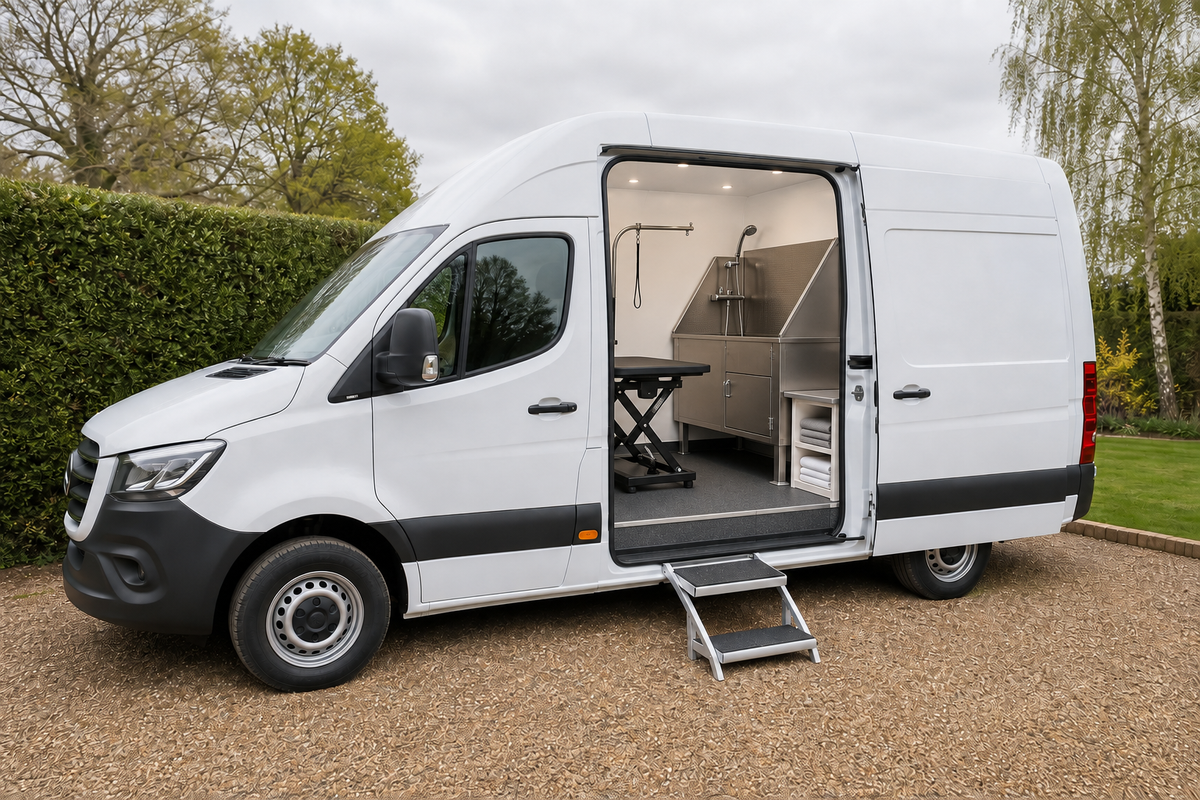
The practical answer
Mobile grooming can be convenient, but it is not automatically calmer or more profitable. Assess the dog’s needs and the complete operating day before choosing or offering the service.
For pet parents: ask about the actual appointment
Find out where the vehicle will park, how the dog enters it and whether you need to provide anything. Ask how the groomer manages a dog that dislikes enclosed spaces, engine noise or a dryer. A quieter alternative to a salon may suit some dogs; others will need a different setup.
- What experience does the groomer have with this coat and temperament?
- What happens if the dog becomes distressed or unwell?
- Can the dog enter and stand comfortably, including with limited mobility?
- How are tools, surfaces and towels prepared between appointments?
- How will you be contacted if the agreed trim needs to change?
For groomers: plan the whole working day
A mobile diary includes driving, parking, setup, cleaning, water and power management, client handovers and vehicle checks. Do not treat the gap between two grooming slots as free capacity until those jobs have a place. HSE’s workload guidance supports assessing demand across the working period; route planning here is an application of that principle. HSE: managing workload.
| Operating question | What to test before committing |
|---|---|
| Travel area | A realistic route at the time of day you intend to work. |
| Parking and access | Safe, permitted space and an unobstructed entry for the dog. |
| Equipment capacity | Water, power, ventilation and temperature control for the planned workload. |
| Service interruption | A plan for a vehicle or equipment fault mid-day. |
| Reset time | Enough time to clean, prepare and check the workspace before the next dog. |
Measure a route, not just an appointment
Trial a small service area and record door-to-door time, appointment duration, delays and reset work. If two otherwise similar days produce very different results, look at route density and access before changing the grooming price or rushing the work. These records are more informative than a generic claim that mobile services earn more.
Confirm local operating requirements
Before launching, check the relevant permissions, vehicle and business cover, electrical arrangements and waste-water and waste-disposal requirements with the appropriate providers or authorities. Requirements depend on the location and setup; a grooming article cannot establish that a particular vehicle is compliant.
A useful pilot review
- Were dogs comfortable entering and staying in the workspace?
- Did cleaning and handovers fit the planned day?
- Which locations caused delays?
- Was there spare capacity for an unexpected problem?
- What must change before expanding the route?
Read next
- Grooming Salon Layout: A More Comfortable Working Space
- Grooming Appointments: Build a Diary That Actually Works
- Understanding Dog Behaviour During Grooming
Sources and further reading
Guidance checked September 2026. The practical checklists and examples are VUNRO editorial guidance; the sources below support the underlying care or equipment principles.
Keep learning
More from the Blade Blog
A Faster Clipping Pass Is Not Always a Faster Groom
Read the guide →
From Used Tool to Ready Tool: Close the Gaps in the Care Process
Read the guide →


