Shih Tzu Grooming: A Comfortable Coat and Easier Haircuts
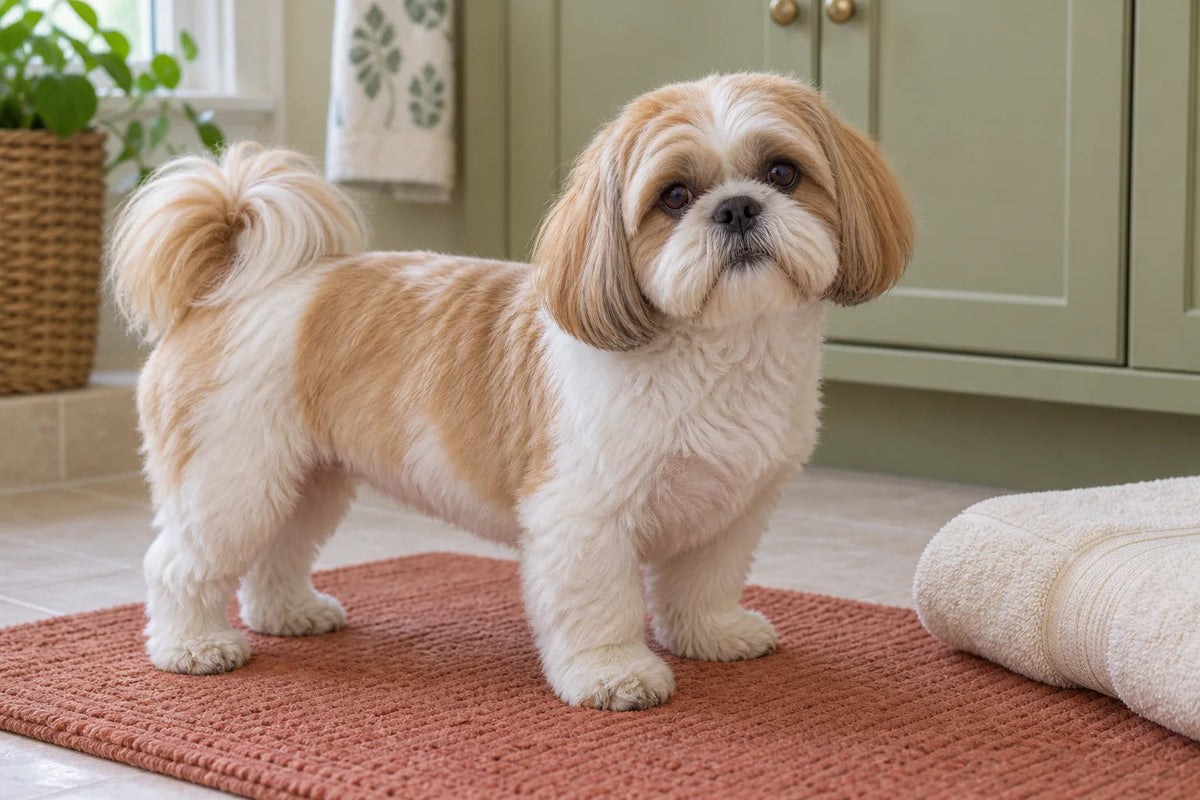
The most useful Shih Tzu haircut is one that keeps your dog comfortable and fits the care you can give between appointments. A long coat can be lovely, but a neat shorter trim is often a better choice than a length that repeatedly tangles.
Whichever look you choose, the daily details matter: food caught in the moustache, hair rubbing beneath a harness, and small knots hidden behind the ears. This guide shows you how to organise those checks without turning every evening into a full grooming session.
Keep these priorities: clear, comfortable facial hair; gentle brushing through the coat’s depth; a comb that passes without pulling; and a haircut scheduled before knots take over. A short body with long ears and legs still needs regular maintenance.
Know what is underneath the long hair
A Shih Tzu has a longer outer coat and softer undercoat. Texture and density differ between dogs, and the change from puppy to adult coat can bring a period of extra tangling. The AKC’s Shih Tzu coat guide describes both this variation and the practical role of a shorter pet haircut.
This is why a blanket rule that no double-coated dog can have a haircut would be misleading. Shih Tzu coat management is different from shortening a shedding coat such as a German Shepherd’s. Make the decision for this breed, this dog and the condition of the hair—not a label on its own.
Start with the face, gently
After meals or drinks, look for damp or sticky hair around the mouth. Soften ordinary dried residue with a warm damp cloth instead of pulling it out with a comb. Dry the hair gently afterwards. Use a clean part of the cloth around each eye and wipe only the surrounding hair; do not rub the eye itself.
Keep the dog’s vision clear. If facial hair needs shortening, ask a groomer for a manageable shape rather than improvising with scissors while your dog turns its head. A topknot is another option for a longer coat, but it must not pull the skin or be left to tighten into a knot. Check it daily and have the fastening demonstrated.
Do not scrub staining away or use household whitening products. Persistent wetness, soreness or an obvious change needs professional advice, not increasingly strong cleaning. Routine grooming is about clean, comfortable hair, not forcing it to be a particular colour.
Brush in layers rather than skimming the surface
For a longer coat, plan daily brushing and comb checks. The breed’s grooming guidance emphasises working in layers so the care reaches beneath the outer hair. Shorter coats may need less time, but still deserve a daily check.
- Choose a calm setup. A non-slip mat on a safe surface lets the dog stand or settle without sliding. Keep your hands gentle and reward cooperation.
- Lift a small layer. Use a suitable flexible brush with light strokes. Work from the ends of a loose tangle, supporting the hair so you do not pull the skin.
- Follow the brush with a comb. The comb should travel through a prepared section comfortably. A catch tells you where to return; it is not an invitation to tug.
- Check the easily missed places. Behind each ear, under the harness, the armpits, leg furnishings and tail base deserve separate attention.
- Split the session when needed. Alternate small areas with breaks. Stop if the dog becomes uncomfortable rather than holding it still until you finish.
For smaller areas of already manageable hair, the VUNRO 5-inch Coarse and Fine Straight Comb gives a compact comb-check option. Keep the teeth away from the eyes and skin. Neither a fine comb nor a detangling spray should be used to force apart a firm mat.
Make the next haircut easier to explain
Instead of asking only for a “puppy cut”, tell the groomer what you want to maintain. Do you want short, easy-to-clean facial hair? How much brushing will you realistically do on the legs? Does the dog’s harness repeatedly tangle the chest?
Agree the body, ears, legs and tail separately, using a photograph to discuss shape rather than expecting an identical result on a different coat. Ask the groomer to show you a finished section and the pressure they use when combing it. That gives you something useful to reproduce at home.
Many Shih Tzu in a pet trim are maintained on roughly four-to-six-week grooming visits. Treat that as a starting discussion, not a deadline you must wait for. If knots return well before the next visit, change the daily routine, the retained length or the appointment interval.
Bathing should leave the roots ready too
Check for tangles before the bath. A firm or skin-tight mat should be assessed by a groomer first; do not soak it in the hope it will fall apart. Use lukewarm water, dog shampoo according to its label and a non-slip bath surface. Keep water away from the face and ears, using a cloth where appropriate.
Rinse thoroughly through the coat, including the underside and legs. Press with absorbent towels rather than rubbing long hair into new tangles. Dry gently in manageable sections, using comfortable airflow your dog tolerates and checking its temperature frequently. A fluffy-looking back does not prove that the armpits or roots are dry.
If a haircut follows, the coat must be fully dry and easy to comb through. See our step-by-step coat preparation guide for the sequence. A clipper should move through prepared hair; it should not be expected to clear knots as it cuts.
Learning to clip at home
A well-maintained Shih Tzu coat can suit a practical clipped pet trim. Start by learning safe handling and an uncomplicated body trim from a professional. Leave close face, foot and sanitary work to someone with the necessary skill, especially if your dog moves unpredictably.
Choose equipment for the desired finish and check compatibility before buying attachments. For example, the VUNRO D-Series Clipper uses D-Series blades; an A5 blade is not interchangeable with them. Its included close-cutting blade does not mean you should use that length over the whole dog. A longer compatible setup may fit the agreed pet trim better.
Remember the work a haircut does not cover
Check paws for ordinary surface dirt after walks and inspect nails, including dewclaws. Have safe nail trimming demonstrated before attempting it. If using a grinder, keep the long foot hair away from the rotating head and use brief touches; rotating equipment can catch hair and can still shorten a nail too far.
A reluctant dog needs a slower handling plan or professional help. You do not have to complete coat care, a bath and every nail in one sitting for the routine to be worthwhile.
Questions owners often ask
Why do knots appear when I brush every day?
You may be brushing the outer hair while missing the roots or friction areas. Check small sections with a comb and ask your groomer to assess your technique, tool and retained coat length.
Can a short haircut mean no brushing?
No. It reduces the amount of hair to manage, but growing coat, longer furnishings and harness areas still need checks. The best cut makes the routine achievable.
Should I cut out a mat with scissors?
No. Skin can be drawn into a knot and be difficult to distinguish from the hair. Stop and ask a groomer to assess removal rather than trying to slide scissors underneath.
Keep learning
More from the Blade Blog
Whippet Grooming: Gentle Coat Care and Comfortable Nails
Read the guide →
Chihuahua Grooming: Smooth Coats, Long Coats and Tiny Paws
Read the guide →