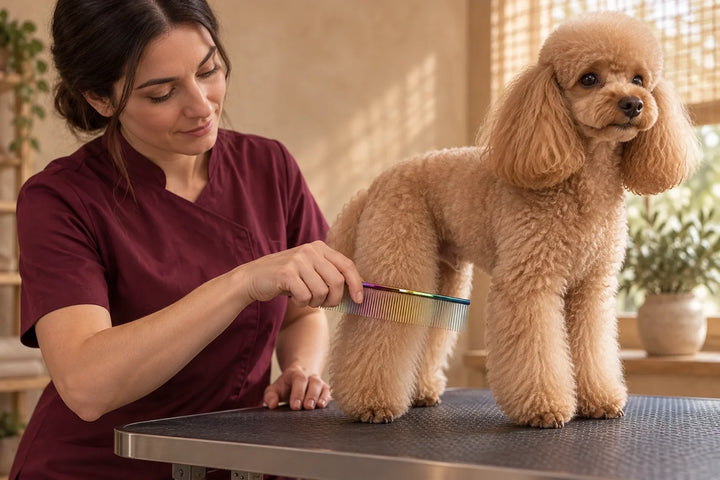
Choosing a Dog Clipper Blade: Fit, Length and Finish
Choose blades in the right order: compatibility first, then coat condition, intended length and the finish you can safely achieve.
The practical answer
Check the clipper’s blade system before choosing a number. Use the length in millimetres on the specific blade listing, and remember that the final appearance also depends on coat and technique.
First, identify the blade system
Find the make and full model number on the clipper, then check its manual and the blade’s compatibility information. Similar-looking heads may attach differently. A5 detachable systems, adjustable heads and model-specific trimmer blades are separate choices. Never force a blade into place or assume that a shared brand name guarantees fit.
Use length as a starting point
A blade’s marked cutting length describes its intended cut, not a guaranteed finished style on every dog. Coat texture, direction of growth, preparation and working with or against the coat can change the result. Discuss a photograph or a small demonstration area with a groomer if you need a predictable style.
| Decision | What to check |
|---|---|
| Blade fit | Exact clipper model and blade system. |
| Length | The millimetre measurement on that specific blade, rather than a number remembered from another system. |
| Tooth pattern | Whether the blade is a finishing or more open-tooth design and whether it suits your training and task. |
| Attachment comb | The blade beneath it, attachment width and the manufacturer’s approved combination. |
| Coat condition | Whether the intended length can pass through the prepared coat without force. |
Understand the limits of attachment combs
A comb attachment cannot turn a tangled coat into a ready-to-clip coat. Check that it locks securely and is paired with an approved blade. Test the fit away from the dog, and stop if it lifts or catches. Do not improvise combinations to obtain a length that the equipment was not designed to produce.
Steel and ceramic still need care
Material is one part of the decision. Both require appropriate cleaning, inspection and lubrication, and every working blade can become hot. Compare replacement-part availability and the service options for the particular cutter. Avoid assuming that one material is automatically best for every coat or that ceramic removes the need for temperature checks.
Match the task to your experience
Sensitive areas, loose skin and tight mats require practical training. A size chart cannot teach safe handling around folds, ears or other vulnerable areas. If you are grooming at home, ask a professional to recommend the length and demonstrate the technique for your dog before buying specialist blades.
Use the VUNRO A5 blade guide for the A5 range, or contact VUNRO with the full clipper model. Compatibility depends on the exact blade fitting and drive system, not simply the number printed on a blade.
Read next
- Safe Clipper Technique: Preparation, Control and Stop Points
- Clipper Performance: Check the Whole Cutting System
Sources and further reading
The VUNRO references provide current product lengths and fitting information. The finish checklist helps apply those details to an individual grooming plan.
Keep learning
More from the Blade Blog

Separate a Dry Surface from a Dry Coat
Read the guide →
Check the Outline in Motion Before Making Another Cut
Read the guide →